
Our Story
Called Back. Sent Forward.
The story of Emmanuel Dusabimana, the movement he answered, and the Rwanda God is transforming.
The Founder's Journey
Emmanuel Dusabimana: A Story of Return
Emmanuel Dusabimana was born and raised in Rwanda, a nation whose landscape of green hills and luminous lakes belies the depth of the wounds it has carried. His earliest years were shaped by the rhythms of Rwandan family life, the local church, and the weight of a history no child in that land could escape. The events of the 1990s did not merely form a backdrop to his upbringing; they became the soil in which a particular kind of faith took root, a faith that could not afford to be abstract or far from the suffering of real people. It was in this crucible that Emmanuel began to understand the call of God not as an invitation to safety but as a commission to return.
Years later, having carried Rwanda in his heart through seasons of study, ministry formation, and personal discernment, Emmanuel heard a question from God that would not relent: What if you went back? Not as a visitor, not as a program director, but as a son returning to his land with something to give. The conviction deepened over months of prayer and community, and in time, Returning to Rwanda was born, not as a polished organization but as a living response to that call. The earliest community gathered around tables and open Scriptures, asking what it would mean to make disciples the way Jesus made them, slowly, relationally, with deep roots in the local church and the local soil.
From those early gatherings, the movement grew with the quiet momentum that comes from genuine transformation. Discipleship circles expanded, and out of years of on-the-ground relationship and careful listening, the Evergreen Discipleship Guide began to take form. The BLESS framework, rooted in Begin with prayer, Listen, Engage, Serve, and Share, became the daily grammar of the movement's community life. By God's grace, the work extended beyond Rwanda's borders into East Africa, carried by the same relational DNA that marked its founding. Along the way, relationships were built with Rwandan pastors, emerging leaders, and communities who recognized in this work something they had been waiting for.
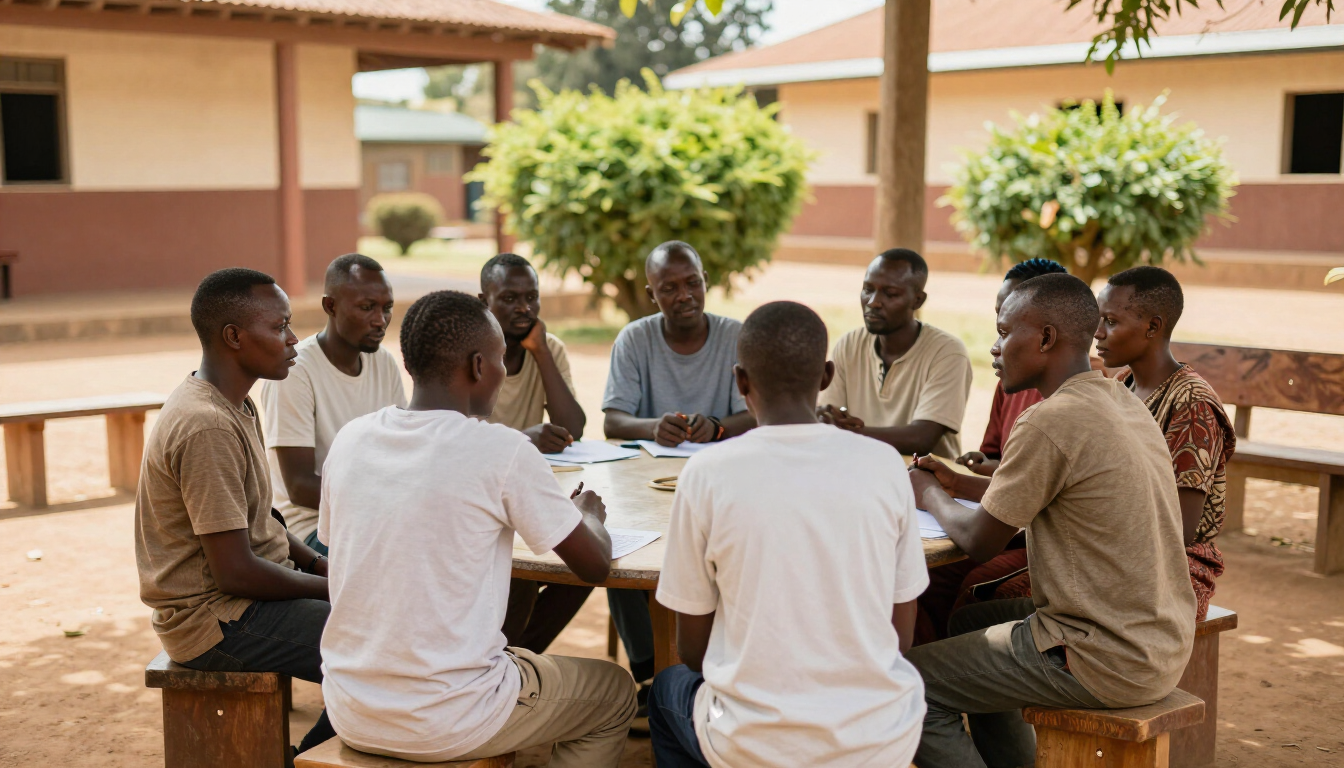
At the center of everything Emmanuel has built is a simple, irreducible conviction: transformation happens in relationship, not in programs. The Scriptures are not a curriculum to be delivered but a living word to be received together, wrestled with, applied, and passed on. That conviction has shaped every resource the movement has produced and every partnership it has pursued. It means the work is slower than some would like, and more costly, but it is also more durable and more truly reflective of how the kingdom of God actually grows.
Returning to Rwanda does not operate with the posture of a short-term mission trip or a program that can be concluded and reported on. The commitment is long-term, rooted in the rhythms of Rwandan life and leadership. The movement is built around the conviction that sustainable change comes through people who are themselves formed, who then form others, generation after generation. This is the patient, faithful work Emmanuel answered when he returned to Rwanda, and it is the work that continues today.
Vision & Conviction
A Movement Built on the Word
The overarching vision of Returning to Rwanda is to see Rwanda and East Africa transformed from the inside out through deep, biblical discipleship rooted in local communities. This is not a vision built around programs, events, or external delivery of services. It is a vision of people, Rwandan and East African men and women, formed by Scripture, made accountable to one another in the context of the local church, and sent outward as agents of genuine kingdom transformation. The measure of success is not attendance or outputs but the quality and depth of disciples who are themselves making disciples.
The Great Commission of Matthew 28:19-20 is the organizing call of everything the movement does. Jesus did not commission his followers to make converts but to make disciples, teaching them to obey everything he commanded. That distinction is not a fine theological point; it is the whole difference between a crowd and a movement. Returning to Rwanda holds that making disciples, not just decisions, is the irreducible first work of the church, and that this work integrates spiritual formation, communal accountability, practical leadership, and the long-term investment of one life in another.
"Go and make disciples... teaching them to obey everything I have commanded you." - Matthew 28:19-20
Rwanda is not merely a mission field in the conventional sense. It is a spiritually strategic nation, one that has walked through extraordinary suffering and extraordinary reconciliation, and where the gospel of genuine transformation carries particular urgency and particular credibility. The church in Rwanda has been through the fire, and what has survived is something worth building upon. Returning to Rwanda believes that the Rwandan church has a prophetic role to play in the broader East African church, not as a recipient of outside ministry, but as a source of witness, wisdom, and leadership for the region. The movement exists to serve and strengthen that role.
The Evergreen Guide
A Discipleship Guide Rooted in Context
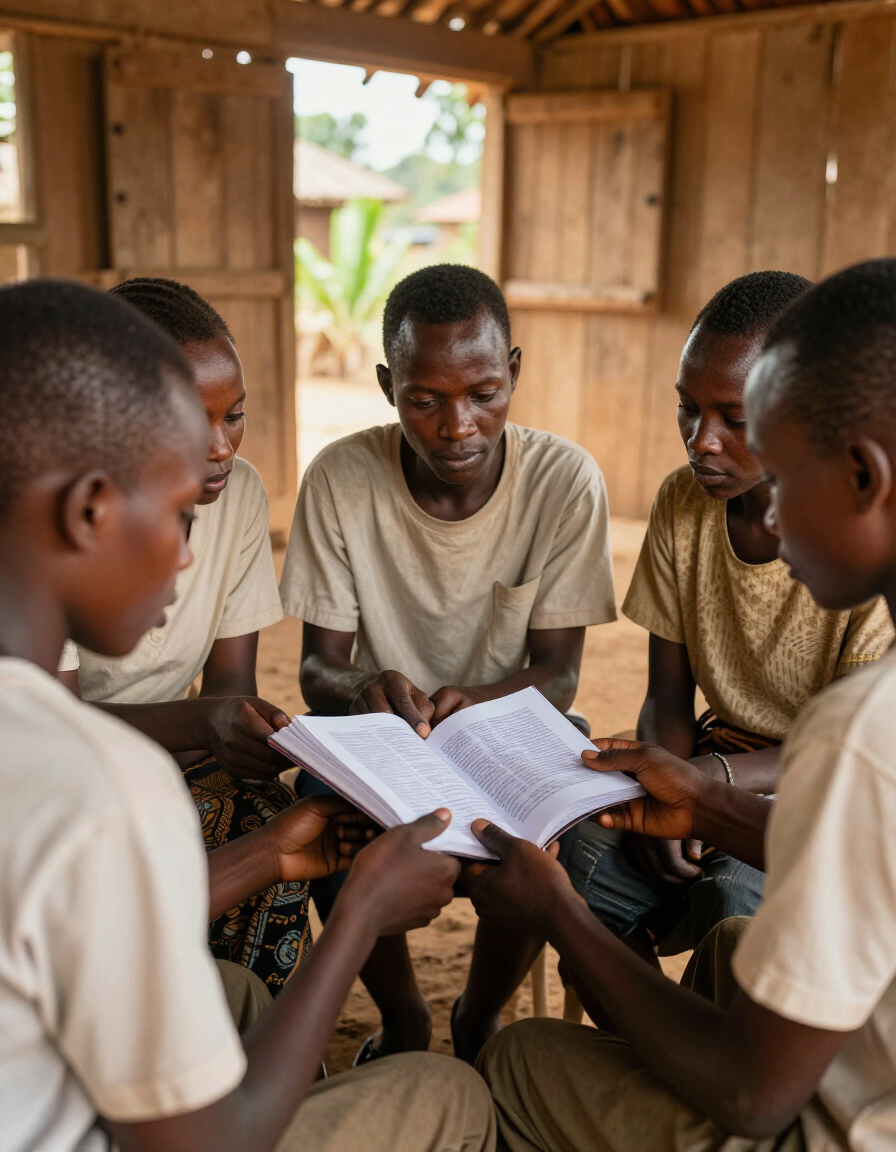
The Evergreen Discipleship Guide is a structured, biblically grounded discipleship resource developed by and for the Rwandan and East African church context. It is not imported curriculum adapted from a Western setting. It emerged from years of on-the-ground relationship, careful observation of what actually forms disciples in this particular cultural and communal context, and deep engagement with Scripture. Every lesson, every framework, and every accountability rhythm in the guide was shaped by real conversations with real communities in Rwanda and East Africa.
The guide contains Scripture-anchored lessons, community discussion guides, practical application frameworks, and accountability rhythms designed for the long arc of disciple formation. It is built to be led by local leaders without requiring heavy institutional infrastructure, making it accessible to church planters, small group leaders, and emerging pastors who are working in resource-limited environments. The design principle is simplicity in form combined with depth in content.
The Evergreen Discipleship Guide is actively used in small groups, churches, and leadership circles across Rwanda and East Africa. It is available in local languages, honoring the conviction that Scripture and discipleship formation must be received in the heart language of the community. The guide continues to be refined through field use, with each generation of practitioners contributing to its ongoing development. It is a living resource for a living movement.
The Community
Rwandan Leaders. Local Roots. Shared Calling.
The conviction at the heart of Returning to Rwanda is plain: this movement is led by Rwandans, not visitors. Emmanuel and the leaders who surround him are sons and daughters of the land, formed by its history, shaped by its communities, and accountable to its people for the long term. Partnership with outside supporters is genuinely welcomed and cherished as a gift; the movement could not carry this work alone. But the center of gravity is always local, always indigenous, always rooted in the reality of Rwandan and East African life as it is actually lived.
The community is broad and multigenerational. It includes local pastors and church planters, emerging young leaders in their twenties navigating faith and vocation, women carrying significant discipleship leadership in their congregations and neighborhoods, entrepreneurial fellows working at the intersection of faith and economic life, and community partners across multiple regions of Rwanda and East Africa. The movement is rooted in the local church and finds its expression through the ordinary, consistent rhythms of gathered community life.
Indigenous leadership is not simply a strategic choice for Returning to Rwanda; it is a theological conviction. The movement holds that sustainable transformation comes through people who share a language, a history, and a long-term stake in the community's future. A leader who will still be present in twenty years carries a different kind of authority and accountability than one who passes through. This conviction shapes who the movement invests in, how it structures its partnerships, and what kind of leadership development it prioritizes at every level of the work.


Join the Movement
This Story Is Still Being Written
Returning to Rwanda is not a finished chapter. It is a living movement, still unfolding across Rwanda and East Africa, still forming disciples, still planting churches, still investing in the next generation of local leaders. There is a place for you in this story, whether through prayer that sustains the work, partnership that resources it, giving that makes it possible, or direct connection that weaves your life into the fabric of what God is doing here. We would love to have you join us.